解法一
对整个树进行中序遍历,得到的遍历结果是一个自增列表 优化:在遍历过程中,若碰到前一个节点值大于后一个节点值,则返回False
1
2
3
4
5
6
7
8
9
10
11
12
13
14
15
16
17
18
19
20
21
22
23
24
25
26
27
28
29
30
31
32
33
func isValidBST(root *TreeNode) bool {
    if root == nil {
        return true
    }
    result, _ := inorderTraversal(root, nil)
    return result
}

// 中序遍历
func inorderTraversal(root *TreeNode, lastNode *TreeNode) (bool, *TreeNode) {
    leftCheck := true
    if root.Left != nil {
        leftCheck, lastNode = inorderTraversal(root.Left, lastNode)
    }
    if leftCheck == false {
        return false, nil
    }

    if lastNode == nil || lastNode.Val < root.Val {
        lastNode = root
    } else {
        return false, nil
    }

    rightCheck := true
    if root.Right != nil {
        rightCheck, lastNode = inorderTraversal(root.Right, lastNode)
    }
    if rightCheck == false {
        return false, nil
    }
    return true, lastNode
}
解法二
在任何一颗树中,所有节点值都在一定范围内(根节点范围:MinInt64 ~ MaxInt64)
如: 输入:[5, 1, 7, null, null, 6, 8, null, null, null, null]
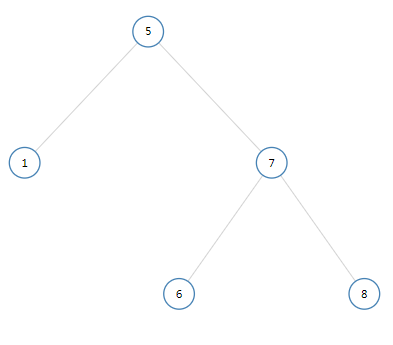
每个子树节点范围:
- 5: MinInt64 ~ MaxInt64
- 1: MinInt64 ~ 5
- 7: 5 ~ MaxInt64
- 3: 5 ~ 6
- 8: 7 ~ MaxInt64
对树进行BFS遍历,判断每个节点值是否在合理范围内,若不在则停止遍历
1
2
3
4
5
6
7
8
9
10
11
12
13
14
func isValidBST(root *TreeNode) bool {
    return isValidBstUtils(root, math.MinInt64 , math.MaxInt64)
}

func isValidBstUtils(root *TreeNode, min, max int)bool{
    if root == nil{
        return true
    }
    if root.Val <= min || root.Val >= max{
        return false
    }

    return isValidBstUtils(root.Left, min, root.Val) && isValidBstUtils(root.Right, root.Val, max)
}
原题内容
给定一个二叉树,判断其是否是一个有效的二叉搜索树。
假设一个二叉搜索树具有如下特征:
- 节点的左子树只包含小于当前节点的数。
- 节点的右子树只包含大于当前节点的数。
- 所有左子树和右子树自身必须也是二叉搜索树。
示例1
输入: [2, 1, 3] 输出: true
示例2
输入: [5,1,4,null,null,3,6] 输出: false 解释: 根节点的值为 5 ,但是其右子节点值为 4